Operations
Get Your Business Ready for December in Kenya
Plan December stock from last year's sales, pay staff double on public holidays, issue eTIMS invoices, spot fake M-Pesa messages and meet January KRA dates.
Biashara Pros editorial team 10 min read
Facts checked against official sources on 3 November 2026. How we check facts

To get a Kenyan business ready for December, plan five things now: stock based on last December’s sales, staff rosters and holiday pay, cash to carry you into January, eTIMS invoices for business customers, and your January KRA deadlines. Add one habit for the busy weeks: confirm every M-Pesa payment yourself before goods leave.
Is your December always either a rush you can’t keep up with, or stock you’re still selling in March? Both cost money. The fix is a plan made in November, while you still have time to order, hire and agree terms.
Which December dates should your business plan around?
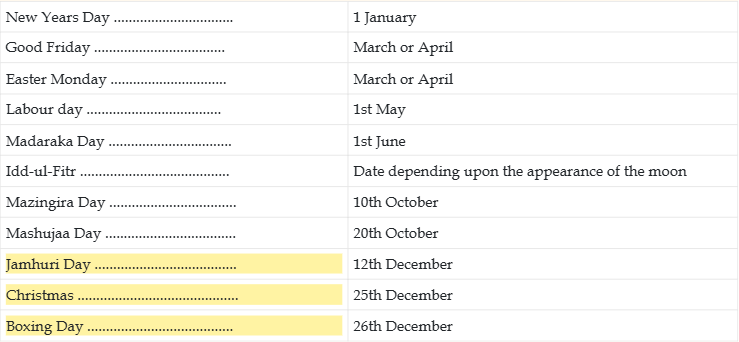
Kenya has three public holidays in December: Jamhuri Day on 12 December, Christmas on 25 December and Boxing Day on 26 December[1]. In 2026 they fall on a Saturday, a Friday and a Saturday, so Christmas gives a Friday to Sunday weekend, and many staff will want to travel.
Mark these on one calendar the whole team can see:
- Your last order dates with each supplier, working back from when you need the stock on the shelf.
- Your last delivery date before Christmas, and tell customers early.
- Days you will open, close or run shorter hours, especially 24 to 26 December and 31 December.
- Pay day for staff, with any public holiday hours worked (see below).
- 9 January and 20 January, when December’s PAYE and VAT fall due[6][5].
How much stock should you buy for December?
Buy from your own numbers, not from a feeling. The best guide to this December is last December.
- Pull last December’s sales. Use your sales book, your till reports or your M-Pesa statement. List your top 20 items by money made, not by number sold.
- Check what ran out and what was left over. An item that sold out by 15 December needed more stock. One still on the shelf in February needed less.
- Ask suppliers for their lead times now. Many suppliers slow down or close over the holidays, and delivery times often get longer in December, so ask now.
- Set a stock budget you can afford to sit on. Stock that doesn’t sell is cash you can’t use for rent or school fees in January.
- Order in two rounds. Bring in most of your stock early, and keep some budget back for a second order of whatever is selling fastest.
Tip: new to the business, with no December to look back on? Ask two or three suppliers which of their items move fastest in December, then start smaller and reorder.
How do you protect your cash flow over the festive season?
Treat December’s extra money as January’s money too. Busy weeks feel like profit, but rent, salaries, supplier bills and your January tax payments still come after the rush.
- Separate business money from personal money (more in how to manage cash flow). Use a business till or paybill, and pay yourself a set amount rather than spending from the till.
- Keep January in view. Count what you must pay in January (our KRA deadline calendar lists the dates): rent, salaries, December PAYE by 9 January and December VAT or Turnover Tax by 20 January[6][5][7]. Put that amount aside as December money comes in.
- Agree payment terms before you deliver. For business customers, agree in writing when they will pay. Many offices close for the holidays, and an invoice sent on 20 December may not be looked at until January.
- Collect what you are owed before the break. Send reminders in early December, not on the 23rd.
How should you price for December?
Price for the profit you need, not just for the rush. A busy month with thin margins can leave you with less than a quiet month at fair prices.
- Know your cost per item first (see our guide to pricing for Kenyan businesses). Add the buying price, transport, packaging and any card or mobile money charges. Your price must cover all of it plus your margin.
- Update prices before the rush, not during it. If supplier prices have gone up, change your price list in November. Customers trust a clear price list more than a price that changes at the counter.
- Use bundles for gifts and parties. A gift pack, a party pack or a “school shopping” bundle raises the value of each sale without cutting the price of your best sellers.
- Show prices everywhere customers look: on the shelf and in your WhatsApp catalogue. Customers who can see prices ask fewer questions and decide faster.
How do you handle deliveries over the holidays?
Promise only what you can deliver. A late delivery near Christmas costs you the customer and often a refund.
- Confirm your rider’s or courier’s holiday schedule in writing, including the days they will not work.
- Set a clear last order date for delivery before Christmas, and post it on your WhatsApp status and in the shop from the start of December.
- Charge delivery honestly. If fuel or courier rates change, update your delivery charges before you take the order, not after.
- Ask for payment before dispatch for new customers, and confirm it in your own M-Pesa records first.
- Send the customer a short message when the order leaves, with the expected time. It cuts down on “where is my order?” calls.
What do you owe staff who work on public holidays?
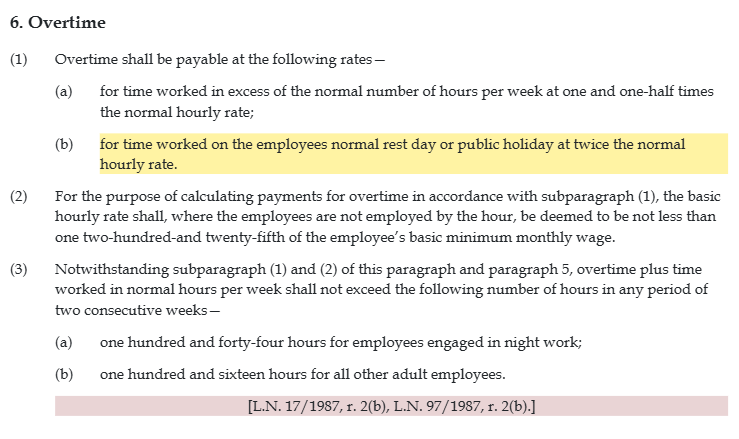
Pay double (our PAYE and net pay calculator helps you budget wages). The Regulation of Wages (General) Order sets overtime for time worked on an employee’s normal rest day or a public holiday at twice the normal hourly rate[2]. The Order covers employees generally but does not apply to workers in the agricultural industry, who have their own wage rules[2].
The same Order sets normal overtime, for hours beyond the normal working week, at one and a half times the normal hourly rate[2]. If December means longer days, budget for both.
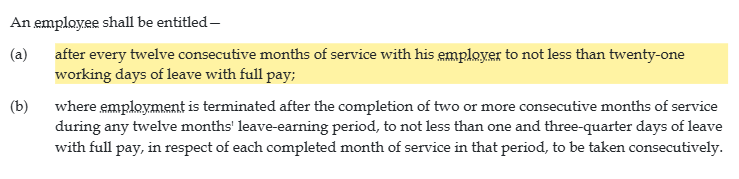
Plan leave too. Under the Employment Act, an employee is entitled to at least 21 working days of leave with full pay after every twelve consecutive months of service[3]. With the employee’s consent, you can divide that leave into parts taken at different times[3]. A simple December roster, agreed in November, keeps the shop open and lets everyone plan their travel home.
Worked example: if an employee’s normal hourly rate is KSh 250, each hour worked on Christmas Day costs KSh 500. Eight hours costs KSh 4,000. (Illustrative rate, not a wage guide. Check the minimum wage for your area and job.)
Why will business customers ask for an eTIMS invoice?
Because most business purchases can only be claimed as an expense with one. KRA says that since 1 January 2024, a business expense can only be claimed if it is supported by an electronic tax invoice, and so all persons engaged in business are required to issue electronic tax invoices[4]. That includes businesses that are not registered for VAT[4].
December brings orders from offices, schools, churches and event organisers. Many will ask for an eTIMS invoice, because they need it to claim the expense. If you can’t issue one, you may lose the order.
KRA also explains that where the seller is a small business or a small-scale farmer with an annual turnover of up to five million shillings, the buyer can issue the invoice on the seller’s behalf[4]. Get set up before the busy weeks, not on the day a big customer asks. KRA says its eTIMS solutions are provided free of charge[4], and your customers can look up an invoice number on KRA’s invoice checker[10].
How do you avoid fake M-Pesa payments when you’re busy?
Confirm every payment yourself before goods leave the shop. On a busy day it is easy to be caught out: a customer shows a payment message, the queue is long, and the goods go out before anyone checks. Safaricom lists fake or old M-Pesa messages and fake reversal requests among common M-Pesa fraud[9].
- Check the payment in your own M-Pesa app, statement or till balance, never on the customer’s phone.
- Give one trusted person the job of confirming payments at the till.
- Never reverse a payment because someone calls or texts asking you to. Check your own statement first.
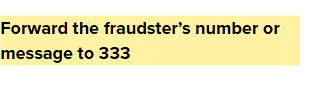
- Forward the fraudster’s number or message to 333[8].
What does December readiness cost, and when is each deadline?
The main extra costs are holiday pay and the cash you set aside. Setting up eTIMS costs nothing, since KRA says its solutions are provided free of charge[4].
- Public holiday hours: twice the normal hourly rate[2]. Overtime beyond the normal week: one and a half times[2].
- Stock: the budget you set from last December’s sales, plus any top-up order.
- January bills: rent, salaries and December’s taxes, set aside as December sales come in.
| When | What to do |
|---|---|
| Now (November) | Order main stock, agree staff roster and holiday pay, set up eTIMS |
| Early December | Post holiday hours and your last delivery date, chase money owed |
| 12, 25 and 26 December | Public holidays[1]: pay double for hours worked[2] |
| By 9 January | File and pay December PAYE[6] |
| By 20 January | File and pay December VAT or Turnover Tax[5][7] |
Must-haves before December
- A stock list and order dates for your top sellers
- Supplier lead times and holiday closing dates, in writing
- A staff roster for every December week, with leave agreed
- Holiday pay budgeted at twice the hourly rate for public holiday hours[2]
- eTIMS set up to issue invoices[4]
- Your January tax amounts set aside: PAYE by 9 January, VAT or Turnover Tax by 20 January[6][5][7]
- Holiday hours and the last delivery date posted where customers will see them
Tips that save money and stress
- Bundle slow sellers with fast ones instead of discounting everything.
- Set up WhatsApp Business quick replies for your price list, location, payment details and delivery areas, so you can answer in seconds when it’s busy.
- Count cash and stock daily in the busiest weeks. Small gaps are easier to trace the same day.
- Write down what happened this December (what sold out, what didn’t, which supplier was late). It is your best guide for next year.
Don’ts
- Don’t buy stock on credit you can’t repay from December sales alone.
- Don’t let staff work public holidays without agreeing the pay first.
- Don’t release goods on the strength of a message on a customer’s phone.
- Don’t leave eTIMS setup until a big customer asks for an invoice.
- Don’t spend January’s tax money in December.
Common mistakes, and what to do instead
Ordering late. Suppliers run out or slow down. Instead, place your main order in November and keep budget for a top-up.
Discounting too early. A December discount on items that would sell anyway gives away profit. Instead, keep prices on your best sellers and use bundles or discounts for slow stock.
Forgetting January. Rent, salaries and tax still arrive after the holidays. Instead, set January’s money aside as December sales come in.
No one checking payments. Instead, make confirming payments one person’s job on busy days.
Unclear holiday hours. Customers who find you closed may not come back. Instead, post your hours in the shop and on your WhatsApp status.
Your 20-minute December checklist
- List last December’s top 20 sellers and what ran out.
- Call suppliers for lead times and holiday closing dates.
- Set a stock budget and order dates.
- Agree the staff roster and public holiday pay[2].
- Confirm you can issue eTIMS invoices[4].
- Set aside money for January rent, salaries and taxes[6][5].
- Post your holiday hours and last delivery date.
- Make one person responsible for confirming M-Pesa payments.
When your hours, prices and delivery areas are clear, customers find it easier to choose you. If you have a Biashara Pros business page, update it with your December hours and prices too.
Common questions
Which public holidays fall in December in Kenya?
Jamhuri Day on 12 December, Christmas on 25 December and Boxing Day on 26 December, as listed in the Public Holidays Act. In 2026 they fall on a Saturday, a Friday and a Saturday.
Is Boxing Day a public holiday in Kenya?
Yes. Boxing Day, 26 December, is listed in the schedule of the Public Holidays Act alongside Jamhuri Day on 12 December and Christmas on 25 December.
Can my staff all take leave in December?
Employees earn at least 21 working days of paid leave after every twelve months of service under the Employment Act. You can agree a leave roster so the business stays open, and with the employee's consent leave can be split into parts.
When are December PAYE and VAT due?
PAYE for December is due on or before 9 January, and the December VAT return and payment are due on or before 20 January. Turnover Tax is also due by the 20th of the following month.
Does eTIMS cost anything?
KRA says its eTIMS solutions are provided free of charge, which it describes as a way of reducing compliance costs.
What is the overtime rate for extra hours in December?
Under the Regulation of Wages (General) Order, hours worked beyond the normal working week are paid at one and a half times the normal hourly rate. Hours on a rest day or public holiday are paid at twice the normal hourly rate.
Sources
- Public Holidays Act (Cap. 110), Schedule, Kenya Law
"Jamhuri Day ... 12th December. Christmas ... 25th December. Boxing Day ... 26th December"
- Regulation of Wages (General) Order, paragraphs 2 and 6, Kenya Law
"for time worked on the employees normal rest day or public holiday at twice the normal hourly rate"
- Employment Act, 2007, section 28 (annual leave), Kenya Law
"not less than twenty-one working days of leave with full pay"
- KRA: What is eTIMS
"Therefore, ALL persons engaged in business are required to issue electronic tax invoices."

- KRA: Value Added Tax, file and pay
"VAT is due on or before the 20th day of the following month."

- KRA: Filing and paying taxes (companies and partnerships)
"PAYE is deducted monthly ... on or before 9th of the following month."

- KRA: Turnover Tax (TOT)
"on or before the twentieth day of the month following the end of the tax period"

- Safaricom: fraud awareness
"Forward the fraudster’s number or message to 333"
- Safaricom: M-PESA fraud (fake and old M-PESA messages, fake reversals)
"Fake/old M-PESA Message ... Fake Reversal Instructions"
- KRA: invoice number checker (eCitizen)
"Invoice Number Checker"
This is general information, not advice for your situation. Rules and rates change with each Finance Act. Before a decision with real money at stake, confirm with a licensed accountant or advocate. Spotted something out of date? Tell us at [email protected] and we will fix it.