Pricing & Margin
Your Shop Is Busy but Broke? Price Every Shelf for Profit
Find your real cost price, see where a shop's margin leaks, how Turnover Tax and VAT cut it, give each shelf a job and keep prices honest under Kenyan law.
Biashara Pros editorial team 13 min read
Facts checked against official sources on 19 November 2026. How we check facts

A Kenyan shop keeps its margin by pricing from the real landed cost, not the supplier’s price. Add transport, packaging and breakage first. Then allow for theft and expiry, take Turnover Tax (1.5% of every shilling of sales) or VAT into account, give each shelf a job, and check your prices every month.
Does your shop feel busy, yet the money never seems to add up at month end? You are not alone.
In retail, the customer can walk to the next shop in two minutes. So you can’t just push prices up. The profit has to come from knowing your numbers better than the shop next door.
Let’s go through it shelf by shelf.
What margin should a retail shop in Kenya aim for?
There is no official “right” margin. It depends on what you sell, how fast it moves and how much it costs to keep. Soap and sugar move fast on thin margins. Cosmetics, phone accessories and clothing can carry more.
What matters is your own number. Gross margin is the profit on an item as a share of its selling price:
Gross margin = (selling price minus landed cost) divided by selling price
Markup is different. It is the profit as a share of the cost. Many shop owners mix the two up and end up earning less than they think.
| If you add this to your cost (markup) | Your margin is |
|---|---|
| 25% | 20% |
| 50% | about 33% |
| 100% (double the cost) | 50% |
So “I add 50%” does not mean you keep half of every sale. You keep a third, before any leaks or tax.
What goes into your real cost price?
Your real cost is the landed cost: everything you spent to get one sellable item onto your shelf. The supplier’s price is only the start.
Count all of these:
- Supplier price for the carton, bale or dozen.
- Transport from the wholesaler: boda, matatu, pick-up or courier fee.
- Loading and offloading, if you pay someone to carry.
- Packaging you give with the item, such as bags or wrapping.
- Breakage and damage on the way.
- The cost of paying the supplier, if your bank or mobile money charges you to send the money.
Here is a worked example. The figures are for illustration only.
A shop buys a carton of 24 bottles of body lotion for KSh 4,800, so KSh 200 a bottle. Transport costs KSh 300, a carrier charges KSh 60, and bags cost KSh 2 a bottle (KSh 48). One bottle arrives broken.
Total spent: 4,800 + 300 + 60 + 48 = KSh 5,208, for 23 bottles you can sell. That is about KSh 226 a bottle, not KSh 200.
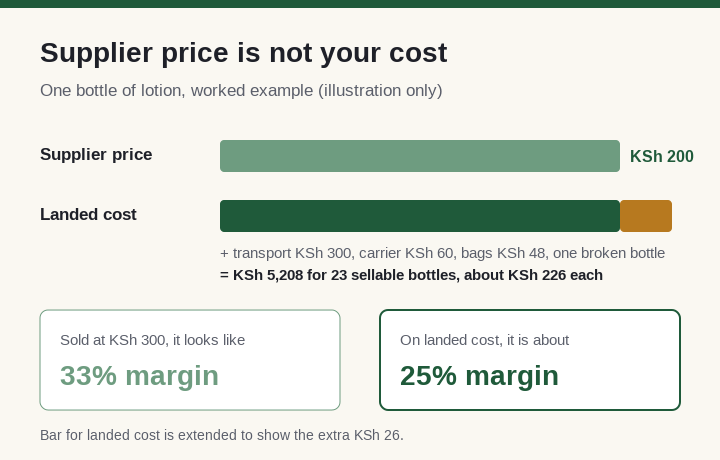
If you sell it at KSh 300, you think your margin is 33%. On the landed cost, it is about 25%.
That gap, repeated across every product, is often the “missing” money.
Where does a shop’s margin quietly leak?
Most margin is lost after the price is set: to theft, damage, expiry, credit and careless measuring. Retailers call stock that disappears this way “shrinkage”.
The maths is harsh. In the lotion example you make about KSh 74 on each bottle sold. If one bottle goes missing, you lose its KSh 226 cost. You need to sell about three more bottles just to replace that profit.
Watch these leaks:
- Theft, by customers or staff, especially small, high-value items near the door.
- Expiry on food, drinks, medicines and cosmetics left at the back.
- Damage from poor storage, sun, rain leaks or rats.
- Customer credit (deni) that is never paid back.
- Free extras given “for goodwill” that nobody records.
- Inaccurate scales when you sell by weight.
That last one is also a legal matter. The Weights and Measures Act makes it an offence to use or keep for trade any weight, measure or scale that is false or unjust[10].
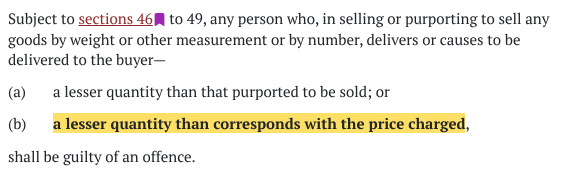
It is also an offence to deliver less than corresponds with the price charged when you sell by weight, measure or number[11]. A scale that reads light cheats your customer. One that reads heavy cheats you.
How do Turnover Tax and VAT change your real margin?
Turnover Tax is charged on your sales, not your profit, so it takes a bigger bite of a thin margin than most owners expect. VAT changes how much of each price is really yours.
Turnover Tax (TOT)
KRA charges Turnover Tax on businesses whose gross turnover is more than KSh 1 million but not more than KSh 25 million in a year[3]. The rate is 1.5% on gross sales[1], and no expenses are allowed for deduction[2].
Say a shop sells KSh 300,000 a month at a 25% gross margin. Gross profit is KSh 75,000. TOT is 1.5% of KSh 300,000, which is KSh 4,500.
That KSh 4,500 is 6% of the shop’s gross profit, before rent, salaries or electricity.
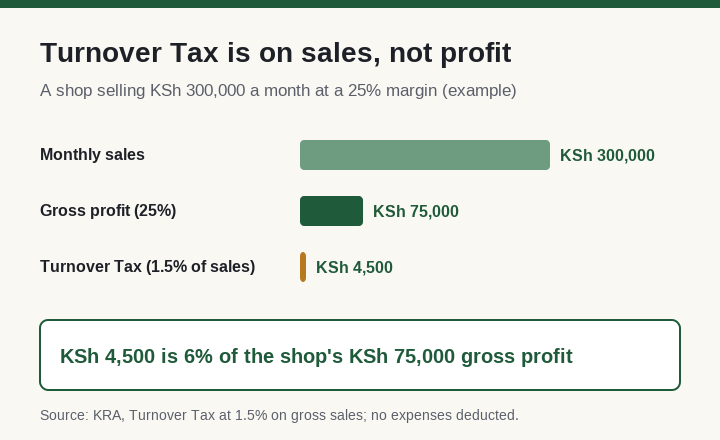
The thinner your margin, the bigger that share. At a 10% margin, the same 1.5% would be 15% of your gross profit.
TOT returns and payment are due on or before the 20th of the following month[13]. Put the money aside as you sell, not when the date arrives.
VAT
KRA says anyone who supplies, or expects to supply, taxable goods and services worth KSh 5 million or more in a year must register for VAT[4]. KRA also notes that a TOT taxpayer dealing in vatable supplies with turnover of KSh 5 million and above must register for VAT as well[16].
The general VAT rate is 16%[5]. If your shelf price includes VAT, part of every sale belongs to KRA. On a KSh 300 VAT-inclusive price, the VAT is 300 × 16 ÷ 116, about KSh 41, so about KSh 259 is yours.
Price from that net figure, not the shelf figure. VAT is due on or before the 20th of the following month[14].
eTIMS
KRA says all persons engaged in business are required to issue electronic tax invoices[6]. Offices, schools and other business buyers will ask for one, so set eTIMS up before the big orders come.
If your turnover is KSh 5 million or less a year, KRA says a business buyer can issue the invoice on your behalf through its Buyer Initiated Invoicing Solution[17]. Having your own eTIMS is still simpler.
You can compare the two tax options with our free Turnover Tax vs VAT tool, and work out VAT on a price with the VAT calculator.
How should you price different items on the same shelf?
Give each item a job: some bring customers in, some make the profit, and some just need to leave the shelf. Pricing everything with the same markup ignores how customers shop.
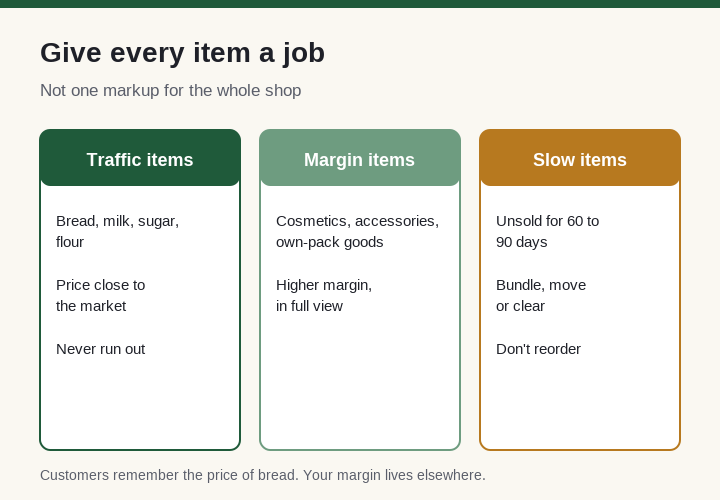
| Shelf job | Examples | How to price |
|---|---|---|
| Traffic items | Bread, milk, sugar, cooking oil, flour | Close to what nearby shops charge. Never run out. |
| Margin items | Cosmetics, phone accessories, snacks, own-pack goods | Higher margin. Place them where customers can see and touch them. |
| Slow items | Anything unsold for 60 to 90 days | Bundle with a fast seller, move to the counter, or clear. Don’t reorder. |
Customers remember the price of bread. Most don’t remember the price of a phone cover. That is where your margin lives.
How does stock turnover affect your profit?
Stock that sits on the shelf is money you can’t use. The faster your stock sells and is replaced, the more profit the same cash earns in a year.
Stock turnover is how many times you sell and replace your average stock in a period:
Stock turnover = cost of goods sold in the period divided by average stock held (at cost)
If you sold goods that cost you KSh 600,000 in a year, and you usually hold KSh 100,000 of stock, your stock turns six times a year, about every two months.
An item with a 20% margin that sells every week can make you more money in a year than one with a 40% margin that sells every three months. Margin and speed work together.
For more on keeping cash moving, read our guide on managing cash flow.
What does Kenyan law say about prices in a shop?
You are free to set your own prices, but they must be honest. Three laws matter most for a shop.
- Consumer Protection Act, 2012. It is a false, misleading or deceptive representation to say a specific price advantage exists when it does not[7]. So a “was KSh 500, now KSh 350” label with a “was” price you never charged puts you at risk.
- Same Act, unconscionable representations. Making an unconscionable representation is an unfair practice. One thing that may be taken into account is whether the seller knows or ought to know that the price grossly exceeds the price at which similar goods are readily available to like consumers[8].
- Competition Act. It makes it an offence, in trade, to make a false or misleading representation with respect to the price of goods or services[9].
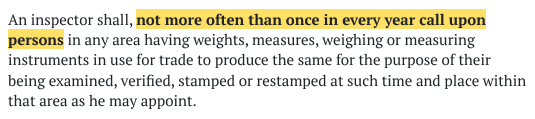
- Weights and Measures Act. Scales must be just[10], and an inspector calls traders in an area, not more than once a year, to bring their weights and scales to be examined, verified and stamped[12]. Ignoring that notice is an offence.
How do you set and keep your retail prices, step by step?
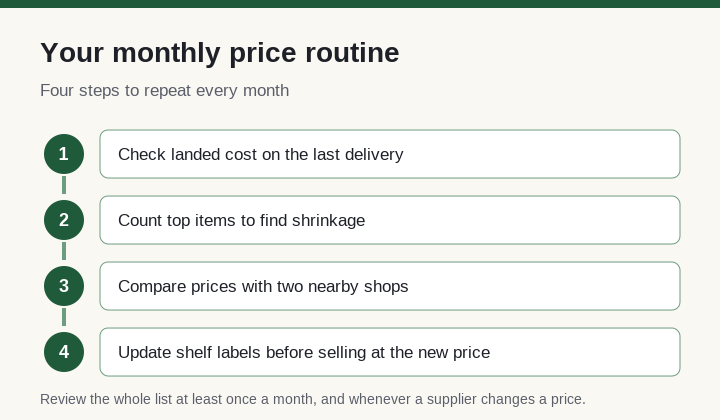
- List your top 30 items by sales. These carry most of your profit.
- Work out the landed cost of each one, using your last real purchase.
- Give each item a job: traffic, margin or slow.
- Choose a target margin for each job.
- Calculate the price: landed cost divided by (1 minus target margin). For a 30% margin on KSh 226, that is 226 ÷ 0.7, about KSh 323.
- Round to a price customers know, such as KSh 320 or KSh 325, and check it against two nearby shops.
- Allow for tax: set aside 1.5% of sales for TOT[1], or price from the figure after VAT if you are registered[5].
- Label every shelf clearly before you sell at the new price.
- Count your top items weekly and your whole stock monthly, to measure shrinkage.
- Review the list every month, and whenever a supplier changes a price.
What do you need in place before you start?
- Your last supplier invoices or receipts, with transport costs written on them.
- A simple stock book or app with item, cost, price and quantity.
- A calculator or spreadsheet for landed cost and margin.
- Clear shelf labels or a price board.
- A just, verified scale if you sell by weight[12].
- Your KRA PIN and tax obligation (TOT or VAT) confirmed on iTax.
- eTIMS set up for business customers[6].
Tips from how Kenyan shops really run
- Write transport on the receipt the day you buy. You will forget the boda fare by Friday.
- Buy fast sellers more often, in smaller lots, if your wholesaler is close. Less cash sits on the shelf.
- Keep high-value small items behind the counter or within the cashier’s sight.
- Check expiry dates when stock arrives and put the oldest in front.
- Set a credit limit for regular customers and write every deni in one book.
- Ask suppliers about price changes before you reorder, so your shelf price changes with your cost.
- Separate the tax money into its own M-Pesa or bank account as sales come in.
What should you never do with retail prices?
- Don’t price from the supplier’s price alone.
- Don’t use one markup for every item in the shop.
- Don’t show a “was” price you never charged[7].
- Don’t use a scale that weighs wrong, or skip the inspector’s verification call[10][12].
- Don’t change a price at the counter after you have quoted it.
- Don’t spend the TOT or VAT money before the 20th.
Which pricing mistakes cost shops the most?
Forgetting landed cost. The margin you see is not the margin you get. Instead, add every cost of getting the item onto the shelf.
Mixing up markup and margin. “I add 30%” gives a margin of about 23%. Instead, price from the margin you want.
Never counting stock. Without counts, you can’t see theft or expiry. Instead, count top items every week.
Copying the shop next door. Their costs and supplier terms are not yours. Instead, check their prices, but set yours from your own numbers.
Reordering slow stock. It ties up cash that fast sellers need. Instead, clear it and buy more of what moves.
Treating TOT as small. At 1.5% of sales[1], it can take a large share of a thin margin. Instead, build it into your price.
What does all this cost, and how long does it take?
| Task | Cost | How long |
|---|---|---|
| Work out landed cost for top 30 items | Free | 2 to 3 hours, once |
| Weekly count of top items | Free | 20 to 30 minutes a week |
| Full stock count | Free, or staff time | Half a day a month |
| Turnover Tax | 1.5% of gross sales[1] | Due by the 20th of the next month[13] |
| VAT, once registered | 16% general rate[5] | Due by the 20th of the next month[14] |
| eTIMS | Free: KRA says its eTIMS solutions are provided free of charge[15] | Set up before business buyers ask |
| Scale verification | Prescribed fee[12] (amount varies); ask your local weights and measures inspector | When an inspector calls, not more than once a year[12] |
Your retail margin checklist
- Landed cost worked out for your top 30 items.
- Every item given a job: traffic, margin or slow.
- Prices set from target margin, not markup.
- Shelf labels match the till.
- Tax money set aside every week.
- eTIMS ready for business customers.
- Scale just and verified.
- Top items counted weekly; full count monthly.
- Slow stock list reviewed; nothing slow reordered.
- Price list reviewed this month.
For more on pricing a service or a quote, see our guide on pricing in Kenya. For the festive rush, see getting your business ready for December.
When your prices are clear and honest, customers trust you and come back. If you run a shop, a free Biashara Pros page with your price list helps buyers looking for your products find you.
Common questions
How do I work out the selling price for the margin I want?
Divide your landed cost by one minus your target margin. For a 30% margin on an item that lands at KSh 226, that is 226 divided by 0.7, which is about KSh 323. Round to a price customers are used to, such as KSh 325.
Can I deduct rent and salaries under Turnover Tax?
No. KRA says no expenses are allowed for deduction under Turnover Tax. The 1.5% is charged on gross sales, whatever your costs were.
When does a shop have to register for VAT?
KRA says any person who supplies, or expects to supply, taxable goods and services worth KSh 5 million or more in a year must register for VAT. Below that, voluntary registration can be granted subject to conditions.
Do I need eTIMS if I only sell to ordinary customers?
KRA says all persons engaged in business are required to issue electronic tax invoices, because a business customer can only claim an expense supported by one. Set it up before a business buyer asks.
Who checks the scales in my shop?
Under the Weights and Measures Act, an inspector calls on traders, not more often than once a year, in an area to bring their weights and scales to be examined, verified and stamped. The time and place are published in the Gazette and a local newspaper.
Is it illegal to charge more than the shop next door?
No. You may set your own prices. But under the Consumer Protection Act, whether a seller knows a price grossly exceeds what similar goods sell for to similar customers can be taken into account in deciding if a representation was unconscionable, which is an unfair practice. So very high prices aimed at customers who cannot protect their own interests are risky.
How often should I review my prices?
Check your landed cost every time a supplier changes a price or your transport cost moves, and review your whole price list at least once a month. Change shelf labels before you start selling at the new price.
Sources
- KRA: Turnover Tax (TOT), rate
"It is payable at the rate of 1.5% on gross sales effective from 1st of July 2023 as per Finance Act 2023."

- KRA: Turnover Tax (TOT), expenses
"No expenses are allowed for deduction."

- KRA: Turnover Tax (TOT), who it applies to
"Turnover Tax is a tax charged on businesses whose gross turnover is more than Kshs. 1,000,000 but does not exceed or is not expected to exceed Kshs. 25, 000,000 during any year of Income."

- KRA: Value Added Tax, registration
"Any person supplying or who expects to supply taxable goods and taxable services with a value of Kshs 5 Million or more in a year is required to register for VAT."

- KRA: Value Added Tax, rates
"16% (General rate) – this rate applies to all taxable goods and taxable services other than zero-rated supplies."
- KRA: What is eTIMS
"Therefore, ALL persons engaged in business are required to issue electronic tax invoices."

- Consumer Protection Act, 2012, section 12 (false representation), Kenya Law
"a representation that a specific price advantage exists, if it does not"
- Consumer Protection Act, 2012, section 13 (unconscionable representation), Kenya Law
"that the price grossly exceeds the price at which similar goods or services are readily available to like consumers"

- Competition Act (Cap. 504), section 55, Kenya Law
"makes a false or misleading representation— (i) with respect to the price of goods or services"
- Weights and Measures Act (Cap. 513), section 21, Kenya Law
"Every person who uses or has in his possession or control for use for trade any weight, measure, weighing or measuring instrument which is false or unjust shall be guilty of an offence"

- Weights and Measures Act (Cap. 513), section 40 (short weight), Kenya Law
"a lesser quantity than corresponds with the price charged"
- Weights and Measures Act (Cap. 513), section 27 (verification), Kenya Law
"An inspector shall, not more often than once in every year call upon persons in any area having weights, measures, weighing or measuring instruments in use for trade to produce the same for the purpose of their being examined, verified, stamped or restamped"
- KRA: Turnover Tax (TOT), filing and payment date
"shall submit a return and pay the tax due to the Commissioner on or before the twentieth day of the month following the end of the tax period"
- KRA: Value Added Tax, due date
"VAT is due on or before the 20th day of the following month."
- KRA: What is eTIMS (benefits)
"It aids in reducing compliance costs as the solutions are provided free of charge"
- KRA: Turnover Tax (TOT), VAT registration for TOT taxpayers
"A Turnover Tax registered taxpayer dealing in vatable supplies and has a turnover of Kshs. 5,000,000 and above is required to register for VAT as well."
- KRA: What is eTIMS (Buyer Initiated Invoicing)
"the purchaser shall issue a tax invoice on behalf of the seller"
This is general information, not advice for your situation. Rules and rates change with each Finance Act. Before a decision with real money at stake, confirm with a licensed accountant or advocate. Spotted something out of date? Tell us at [email protected] and we will fix it.