Sales and marketing
Sell More School Uniforms in January Without Dead Stock
What schools and parents ask uniform suppliers before they order: fabric samples, sizes, deposits, delivery dates, eTIMS invoices and payment terms in writing.
Biashara Pros editorial team 12 min read
Facts checked against official sources on 3 November 2026. How we check facts

To sell more school uniforms for January, get ready in November. Schools want a sample that matches their colour, shade and design, a firm delivery date, an eTIMS invoice and, for public tenders, a valid KRA Tax Compliance Certificate. Parents want the right size, a fair price and a garment that passes at the school gate. Agree all of it in writing.
Every December you see it. Parents arrive in the first days of January with a shopping list, a child who has grown two sizes, and very little patience. The tailors and shops who planned in November sell out. The ones who waited spend January turning people away or sewing through the night.
This guide is for uniform makers, tailors, school outfitters and clothing shops in Kenya who want a bigger, calmer January. It covers what schools and parents actually ask before they order, the rules that protect you, and the paperwork that wins school contracts.
Who buys school uniforms, and how do they decide?
Two kinds of buyers, with different questions. Schools buy in bulk (or choose a supplier for parents), and they decide on specification, price, paperwork and reliability. Parents buy one or two sets at a time, and they decide on fit, price, durability and whether the school will accept it.
| Schools | Parents | |
|---|---|---|
| What they buy | Bulk orders, sports kits, sometimes a supplier for the whole intake | One or two sets per child, often in a rush |
| What they ask first | Can you match our sample? Can you deliver by the date? | Is this the right colour and size? Will the school accept it? |
| What they need from you | A written quote, delivery schedule, eTIMS invoice, tax compliance for tenders | A clear price, a receipt, a collection date |
| When they usually decide | October to December | Late December and the first week of January |
Plan for both. A school order fills your workshop for weeks; parents fill your shop for days.
Can parents buy uniforms from any shop in Kenya?
Yes, according to the Competition Authority of Kenya and the Ministry of Education, as long as the uniform meets the school’s specification. In February 2016 the Competition Authority of Kenya (CAK) warned schools that parents “should be free to buy uniform from their preferred shops or outlets” as long as the uniform meets the colour, shade, thread count and design the school prescribes[3]. CAK said directing parents to particular shops breaches section 21(3)(b) of the Competition Act[3], which prohibits agreements or practices that divide markets by allocating customers, suppliers, areas or specific types of goods or services[1].
In October 2023 the Education Cabinet Secretary told MPs that the Ministry of Education had sent a circular in May 2023 to regional and county directors of education, banning schools from selling uniforms or prescribing uniform sellers to parents[4]. He said it would be up to parents to buy “from wherever as long as it meets the requirements of the schools”[4].
What this means for you: specification is your entry ticket. If your garment matches the colour, shade, thread count and design, parents can choose you. If it doesn’t, the school can turn the child away, and the parent will not come back.
What do schools ask uniform suppliers before they order?
They ask whether you can match their sample, on time, at the price, with the right papers. Expect these questions from a bursar, principal or procurement officer:
- Can you match our sample? Bring a finished garment in their colour, not a fabric swatch alone. Shade differences show up in daylight and after washing.
- What fabric is it, and how does it wash? Know the fibre mix and weight of your fabric, and wash-test one piece before you promise anything.
- How many can you make, and by when? Give a delivery schedule you can actually meet, with dates for each batch.
- What does each size cost? Many schools want one price per item across sizes, or a clear price band for small, medium and large.
- Do you do badges, embroidery or name tags? State the cost per piece and who supplies the artwork.
- Can you issue an eTIMS invoice? KRA says all persons engaged in business are required to issue electronic tax invoices[5], and a buyer can only claim a business expense that is backed by one[5]. If your annual turnover does not exceed five million shillings, KRA says the buyer issues the invoice on your behalf[5].
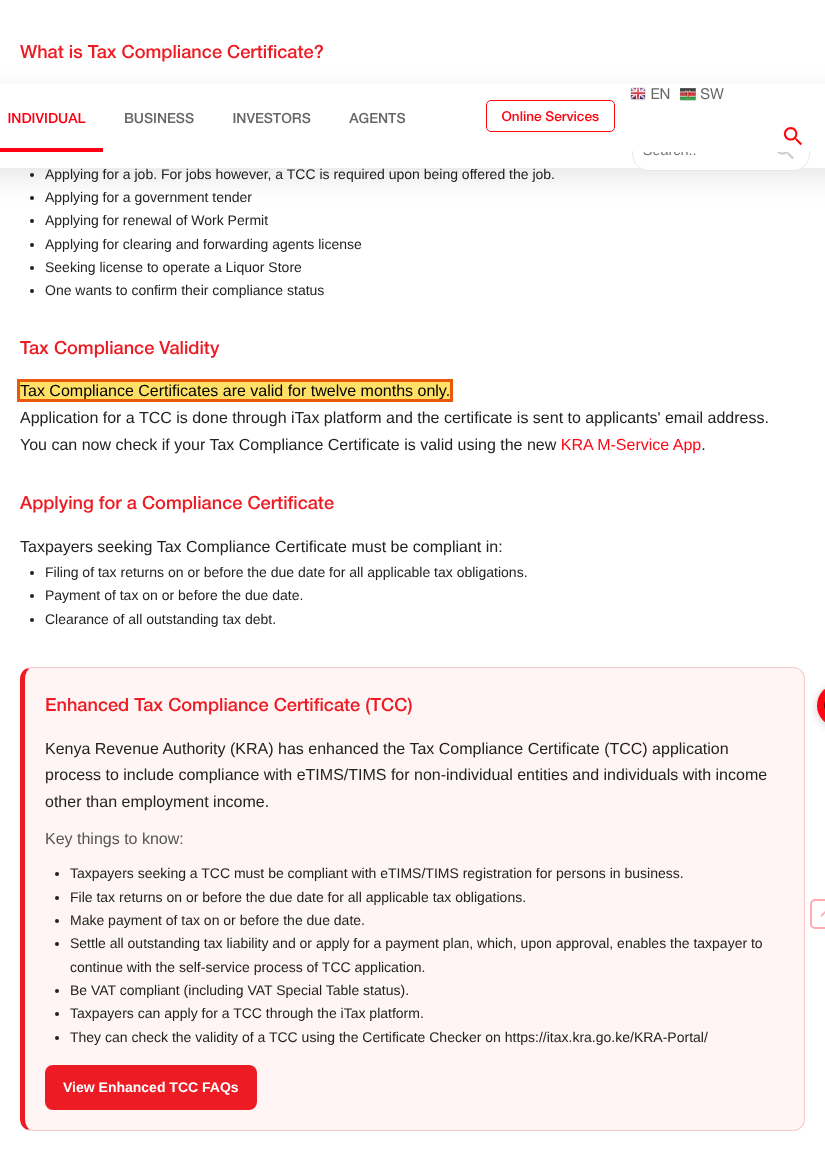
- For public tenders, is your tax compliance current? KRA lists applying for a government tender among the reasons you need a Tax Compliance Certificate (TCC)[6], and a TCC is valid for twelve months only[6]. KRA also says businesses seeking a TCC must now be compliant with eTIMS registration[6], so the two go together.
Definition: a Tax Compliance Certificate (TCC) is KRA’s proof that a business is filing returns and paying taxes[7]. You apply for it on iTax[6].
What do parents ask before they buy a uniform?
Will it pass at the school gate, will it fit, and will it last a term? Parents ask simple questions, often by WhatsApp before they come in:
- “Do you have the uniform for [school name]?” Keep a list of the schools you stock, with photos.
- “What sizes do you have?” Post a size chart with ages and measurements, not just S, M and L.
- “How much for the full set?” Price the set (shirt, trousers or skirt, sweater, tie) and each item separately.
- “Will the colour match?” Keep the school’s sample or specification in the shop and show it beside your garment.
- “When can I collect?” If you make to order, give a date and stick to it.
How do you prepare your stock and workshop for January?
Order fabric and accessories in November, and sew your fast sizes first. Most of your January rush comes from a small number of schools and sizes. Make those before December.
Step by step:
- List your schools. Write down every school you sold to last year and how many sets of each size went out.
- Get or update each specification. Ask the school for its current colour, design and badge. Photograph the sample.
- Order fabric early. Buy enough of each colour from one batch, so shades match across the whole order.
- Wash-test one garment per fabric. Check shrinkage and colour run before you cut in bulk.
- Sew the fast sizes first. Use last year’s sales to decide which sizes and schools to stock.
- Price every item and set. Include fabric, thread, buttons, zips, labour, badges and transport (our guide to pricing for Kenyan businesses shows how).
- Set up eTIMS. KRA says its eTIMS solutions are provided free of charge[5].
- Check your TCC date. If you bid for public school tenders, apply on iTax 7 days before it expires[7]. Open tenders are listed on our tenders board.
- Put your terms in writing. One page for schools (quote, deposit, delivery, payment date) and one for parents (price, collection date, exchange policy).
How should you agree payment with a school?
In writing, with a payment date, before you cut a single piece of fabric. Late payment from institutions is one of the biggest risks for a uniform maker, because you pay for fabric and labour weeks before the school pays you.
The Competition Act gives a useful list. In its section on abuse of buyer power, it says an agreement between a buyer business and a supplier business shall include the terms of payment, the payment date, the interest rate payable on late payment, the conditions for termination and variation with reasonable notice, and a way to resolve disputes[2]. It also lists delays in payment of suppliers without justifiable reason in breach of agreed terms of payment as abuse of buyer power[2]. A public school may not count as a business under the Act, but the list still makes a sound contract checklist.
Use that list as your contract checklist:
- Deposit: a share paid on order, so fabric is covered before you start.
- Payment date: a fixed date or number of days after delivery.
- Late payment: what happens if the date passes.
- Changes: what happens if the school changes the design or quantity after you start.
- Disputes: who you talk to, and how.
If a school still doesn’t pay, write a reminder that quotes the agreed date. If that fails, the Small Claims Court handles claims up to one million shillings[9].
Should you take deposits from parents?
Yes, for made-to-measure or pre-ordered uniforms. A deposit protects you from garments nobody collects. When a parent pays now and collects later, the deal is in many cases a “future performance agreement”: one where delivery or full payment happens after you agree. Section 18 of the Consumer Protection Act, 2012 says every such agreement shall be in writing, shall be delivered to the consumer and shall follow the prescribed requirements[8]. A simple receipt-style order form works:
- Child’s name, school and sizes (with measurements if made to measure)
- Items, price per item and total
- Deposit paid, balance due and payment method
- Collection date
- Your business name, phone number and till or paybill
Give the parent a copy, by paper or WhatsApp photo, and keep one yourself. It ends most arguments before they start.
How much does it cost, and what is the timeline?
Your main costs are fabric, labour and the cash you tie up before January. Fabric, accessory and labour prices vary by town, supplier and quality, so build your price list from your own receipts rather than someone else’s figures. Some of the paperwork costs nothing: KRA says eTIMS is provided free of charge[5].
| When | What to do |
|---|---|
| Early November | List schools and sizes from last year, get current specifications |
| Mid November | Order fabric from one batch per colour, wash-test samples |
| Late November | Quote schools in writing, agree deposits and payment dates |
| Late November to December | Sew fast sizes, post your size chart and price list |
| December | Take parent pre-orders with written order forms |
| Late December to early January | Rush weeks: extra hands at the counter, fixed collection times |
| Every 12 months | Renew your TCC on iTax, 7 days before expiry[6][7] |
Keep cash in view too: you will spend on fabric in November and earn in January. Our guide on managing cash flow shows how to plan the gap.
Must-haves before the January rush
- Current specification and photo of each school’s uniform
- Fabric from one batch per colour, wash-tested
- A size chart with ages and measurements
- A price list per item and per set
- eTIMS set up for invoices to schools and businesses[5]
- A valid TCC if you bid for public tenders[6]
- A one-page school agreement (deposit, delivery, payment date, late payment)
- A parent order form with collection date
Tips from how uniform selling works in Kenya
- Post your school list on WhatsApp Status in December. Parents search by school name; “We have [school] uniforms, sizes 4 to 16” gets replies.
- Confirm M-Pesa payments in your own app, never on the customer’s phone, especially when the shop is full.
- Keep the school’s sample in the shop. Showing it beside your garment settles the “will it match?” question in seconds.
- Offer a free hem or button fix within the first week. It costs little and parents remember it.
- Leave room in the hem and sleeves. Children grow, and parents like a uniform that lasts the year.
- Use a free invoice generator for quotes to schools, then issue the final invoice through eTIMS.
Don’ts
- Don’t promise a shade you haven’t tested. A mismatch means returns and a parent who tells others.
- Don’t start a school order without a deposit and payment date in writing. You carry all the risk.
- Don’t build your plan on a deal where the school sends every parent to you. In 2016 CAK said directing parents to particular shops breaches the Competition Act[3], and that parents should be free to buy elsewhere if the uniform matches[3].
- Don’t let your TCC lapse in tender season. It is valid for twelve months only[6].
- Don’t take a parent’s deposit without a written order. The Consumer Protection Act expects pre-paid orders in writing in many cases[8], and it protects you too.
Common mistakes, and what to do instead
| Mistake | Why it hurts | Do this instead |
|---|---|---|
| Buying fabric in small lots | Shades differ between batches | Buy one batch per colour for the season |
| Pricing per item without counting badges and labour | You sell at a loss in the busiest month | Cost every part of the garment first |
| Quoting a school by phone only | No proof of price, deposit or payment date | Send a written quote and agreement |
| Sewing all sizes equally | Fast sizes run out, slow sizes pile up | Use last year’s sales to plan sizes |
| Not issuing eTIMS invoices | KRA requires them, and business buyers can’t claim the expense without one[5] | Set up eTIMS in November |
| No collection date for parents | Uncollected garments tie up cash | Write the date on every order form |
Your January uniform checklist
- School list and last year’s sizes written down
- Current specification and photo for every school
- Fabric ordered, one batch per colour, wash-tested
- Prices set per item and per set
- eTIMS ready
- TCC valid if bidding for tenders
- School agreements signed with deposit and payment date
- Parent order form printed and on WhatsApp
- Size chart and school list posted
- Extra hands booked for the rush weeks
Get found by schools and parents
When schools and parents look for a uniform supplier, a clear business page with your schools, sizes, prices and delivery areas helps them choose you. If you list on Biashara Pros, add your uniform range and starting prices before December.
Common questions
Can a school force parents to buy uniforms from one shop?
In 2016 the Competition Authority of Kenya said parents should be free to buy from their preferred shops as long as the uniform meets the colour, shade, thread count and design the school prescribes. In October 2023 the Education Cabinet Secretary told MPs that a May 2023 Ministry circular banned schools from prescribing uniform sellers to parents.
Do I need an eTIMS invoice to sell uniforms to a school?
KRA says all persons engaged in business are required to issue electronic tax invoices, and a buyer can only claim a business expense supported by one. Where the seller's annual turnover does not exceed five million shillings, KRA says the purchaser issues the invoice on the seller's behalf.
How long is a KRA Tax Compliance Certificate valid?
Twelve months. KRA advises applying for a new one through iTax 7 days before the old one expires.
What should a parent's uniform order form include?
The child's name, school, sizes, items, price, deposit, balance and collection date, plus your business name and payment details. Give the parent a copy and keep one yourself. The Consumer Protection Act, 2012 says a future performance agreement must be in writing and delivered to the consumer.
What can I do if a school does not pay my uniform invoice?
Start with a written reminder that quotes the agreed payment date. If that fails, the Small Claims Court hears claims of up to one million shillings.
What do parents check first when buying a uniform outside the school?
Whether it will pass at the school gate: the colour and shade match, the design and badge are right, and the fabric feels like the sample. Show them the school's sample or specification side by side with your garment.
Sources
- Competition Act, 2010 (as amended 2019), section 21(3)(b), Competition Authority of Kenya
"divides markets by allocating customers, suppliers, areas or specific types of goods or services"
- Competition Act, 2010 (as amended 2019), section 24A (abuse of buyer power), Competition Authority of Kenya
"An agreement between a buyer undertaking and a supplier undertaking shall include— (a) the terms of payment; (b) the payment date; (c) the interest rate payable on late payment"
- Business Daily: Watchdog warns schools directing parents to particular uniform shops (news, 3 February 2016)
"as long as school uniform bought meets the colour, shade, thread count and design as prescribed by the respective schools"
- Education News: Machogu bans schools from choosing uniform outlets for parents (news, 25 October 2023)
"It will be up to the parent to source it from wherever as long as it meets the requirements of the schools"
- KRA: What is eTIMS
"ALL persons engaged in business are required to issue electronic tax invoices."

- KRA: Learn about tax compliance (Tax Compliance Certificate)
"Tax Compliance Certificates are valid for twelve months only."
- KRA: FAQ on tax compliance (PDF)
"Application for TCC should be lodged 7 days prior to expiry of the previous one."
- Consumer Protection Act, 2012 (section 18), Kenya Law
"Every future performance agreement shall be in writing, shall be delivered to the consumer"

- Small Claims Court Act, 2016, Kenya Law
"The pecuniary jurisdiction of the Court shall be limited to one million shillings."

This is general information, not advice for your situation. Rules and rates change with each Finance Act. Before a decision with real money at stake, confirm with a licensed accountant or advocate. Spotted something out of date? Tell us at [email protected] and we will fix it.